
To phenomenologically engage with trauma, we approach it as a lived phenomenon, focusing on how trauma is lived rather than what caused the trauma. This shift in perspective allows for a deeper understanding of the complexities and nuances of trauma, moving beyond a simplistic cause-and-effect framework.
When we consider how trauma is lived, we pay attention to the individual’s subjective experience and the ways in which trauma manifests in their everyday life. This involves listening to their narratives, observing their embodied responses, and acknowledging the disruptions in their sense of time and meaning. By doing so, we gain insight into the profound and pervasive impact of trauma, which often extends beyond the event itself.
A phenomenological approach also emphasizes the importance of empathy and presence. It requires us to be attuned to the survivor’s experience, offering a non-judgmental and supportive space for them to express their feelings and thoughts. Through empathetic engagement, we can help survivors navigate their trauma, facilitating their journey towards healing and integration.
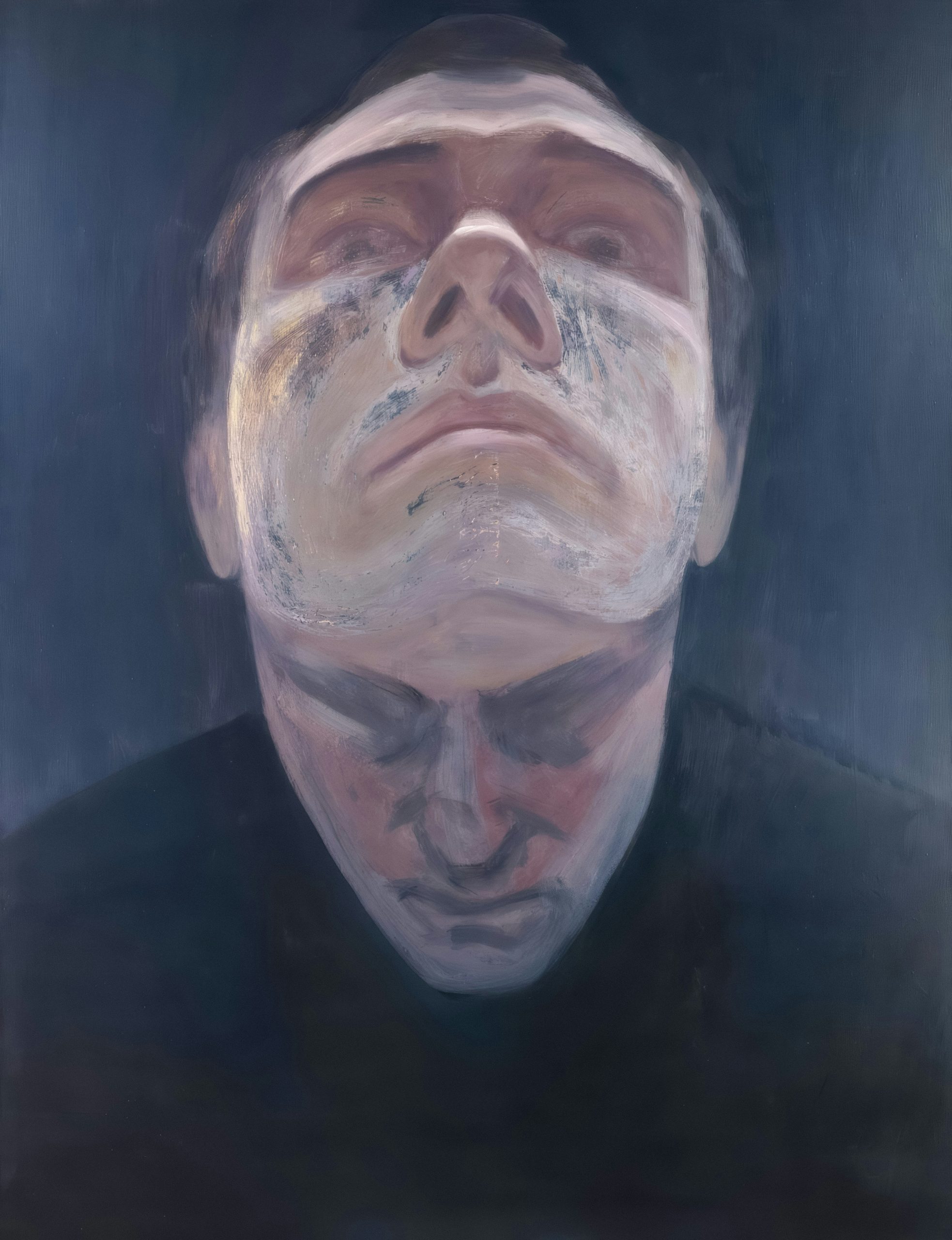
Trauma is a lived disruption of time, body, and meaning. Unlike conventional definitions that often focus on specific traumatic events or the psychological aftermath, the phenomenological approach emphasises the lived experience of trauma. This perspective considers how trauma is felt and experienced in the immediate aftermath and over time, acknowledging its profound impact on an individual’s perception of the world, their body, and the meaning they ascribe to their experiences.
When examining trauma phenomenologically, several key themes emerge:
Embodiment: Trauma is not only a mental or emotional experience but also a deeply physical one. The body holds the memories and sensations of trauma, which can manifest in various ways such as chronic pain, tension, or somatic disorders. The lived body is central to the phenomenological understanding of trauma, as it is through the body that individuals experience and navigate their world.
Temporality: Trauma disrupts the normal flow of time. Survivors often experience a sense of being stuck in the past, as traumatic memories intrude into the present, making it difficult to move forward. This altered sense of time affects their ability to plan for the future, as past trauma continuously shapes their present experiences.
Intentionality: This concept refers to the directed-ness of consciousness towards objects, events, or states of affairs. In the context of trauma, intentionality becomes disrupted, as the traumatic event dominates the survivor’s focus and attention. Instead of engaging with the world in a fluid and spontaneous manner, the individual’s consciousness is often fixated on the trauma, hindering their ability to engage with other aspects of life.
Affect: Trauma profoundly impacts an individual’s emotional life. Feelings of fear, helplessness, and despair often accompany traumatic experiences. Phenomenologically, affect is not merely a response to trauma but a fundamental way in which the experience is lived and embodied. The intensity and persistence of these emotions highlight the enduring presence of trauma in the survivor’s life.
Meaning–making: Trauma shatters the individual’s sense of meaning and coherence. The world, which once seemed predictable and understandable, becomes chaotic and incomprehensible. Survivors often struggle to make sense of their experiences, and this search for meaning is a central aspect of the phenomenological approach to trauma. It involves exploring how trauma alters the individual’s understanding of themselves, others, and the world at large.
Trauma and Time Consciousness
Henry-Louis Bergson, the French 20th Century philosopher, distinguishes between the notions of memory as habit memory and real memory.
By ‘habit memory’ Bergson regards those of automatic, embodied routine actions that stored in the body and reproduced without conscious effort; such as riding a bicycle or flinching at a loud sound. The notion of ‘real memory’ involves the intentional act of recalling an event, such as remembering the emotional texture of a childhood conversation; therefore real memory is recollective and conscious.
In the case of trauma, this balance collapses. Traumatic experience is often not stored as pure memory but fixated in the body as habit memory. For instance, imagine a woman who, years after surviving domestic violence, finds herself freezing whenever she hears the sharp clink of cutlery on porcelain. She may not consciously recall the details of the night it all started; …the raised voice, the slammed plate, but her body does. Her shoulders tense, breath shortens, and she feels a flood of dread without knowing why. The sharpness of sound bypasses conscious recollection and activates a habitual bodily response. This is not a remembered past but a relived present. Trauma fails to integrate into pure memory, and remains frozen in habitual memory, forcing the person to relive the event as if it were happening now.
Bergson’s notion of time or duration (durée), as a continuous flow in which the past melts into the present and the present disappears into the future, can be quite helpful in explaining this fragmentation of memory in trauma. For many of us, memories emerge gently into the present, shaping and enriching our experience of present. However, for someone with unresolved trauma, time becomes fractured. By fractured time, we means that the past does not recede into memory, rather it erupts unbidden into the here and now, tearing the fabric of continuity of it to the next moment. That same woman may find herself, in the middle of a calm dinner with friends, suddenly overwhelmed by fear and confusion, as if time has folded in on itself. In such moments, the past is not merely actively remembered: but it is re-experienced. The trauma has colonised the present, interrupting the natural flow of duration and leaving her feeling disoriented, as though time itself has betrayed her.
Let me put it into pure phenomenological language:
Trauma disrupts the structure of the inner sense-making of time. Inner time-consciousness is the outcome of the synthesis of retention (past), primal impression (present), and protention (future)in a subjective flow. Trauma disrupts this synthesis by holding past experiences as past while allowing the present to unfold. Here, the traumatic event becomes ‘stuck’ in the retentional field, refusing to recede into the past. Instead of a continuous, synthesized stream, consciousness is caught in a loop where a past moment intrudes into the present. Instead of past experiences softly feeding into the present, trauma violently imposes itself, disrupting the passive flow of time-consciousness. The subject does not merely remember trauma but is gripped by it, as if consciousness is being forced into a particular temporal structure.
Healing as Restoring the Inner Time-Consciousness
As I explored earlier, Traumatic flashbacks are not passively received but actively impose themselves on the present unfolding. Therefore, the therapeutic task is not to cognitively reinterpret the traumatic memory; rather, we should allow the affect to move, transform, and be integrated into time-consciousness. Healing, requires more than recalling facts about the relation to the past events. It involves reweaving the disrupted texture of time. In trauma, the past remains unassimilated, not because it is forgotten, but because it has never truly been lived through in the first place. It lingers in the body as unfinished experience, suspended in a kind of temporal exile. The work of therapy is to create a space in which these fragments can begin to move again: being held, spoken, and ultimately integrated. Therapist should aid the person in trauma to gently re-establishing the conditions in which memory can shift from habitual to real, from a stuck loop of embodied reaction to a recollective act that allows meaning, context, and narrative.
This work often unfolds slowly, in layers, as the therapist supports the person in re-inhabiting their own temporality. That may begin with learning to recognise the somatic echoes of the past as the present triggers, moments when the body acts as if a threat is still occurring. By cultivating safety and presence, therapy helps to slow time down, so that what once erupted uncontrollably can be approached with care. In this sense, the therapeutic encounter participates in durée: not a linear unpacking of events, but a spiral movement in which the past is revisited from the vantage of the present, each time slightly differently, each time with the possibility of lessening its grip.
By restoring the flow of time, the person who was once in trauma can narrate what was once unspeakable, to mourn what was not allowed to be mourned, to feel what was too overwhelming to feel. It is to give the past a place in time, rather than allowing it to haunt the present as a rupture. When this happens , even in moments, in glimpses, time begins to flow again. The person may still remember the traumatic event, but they are no longer inside it. The memory becomes one moment among others, no longer eclipsing all else. In Bergsonian terms, it is reintegrated into the whole of duration, no longer split off from the continuity of life. The self, likewise, is no longer reduced to the reactive fragment of survival: healing from trauma is to rediscover our capacity to move, to imagine, and to become.